- About fischer
- group of companies
- Sustainability
- Newsroom
- Spotlights
- Career
- Home
- Newsroom
- Press releases
- fischer fixing systems
- Wrecking ball rejected: fischer gives existing structures a future
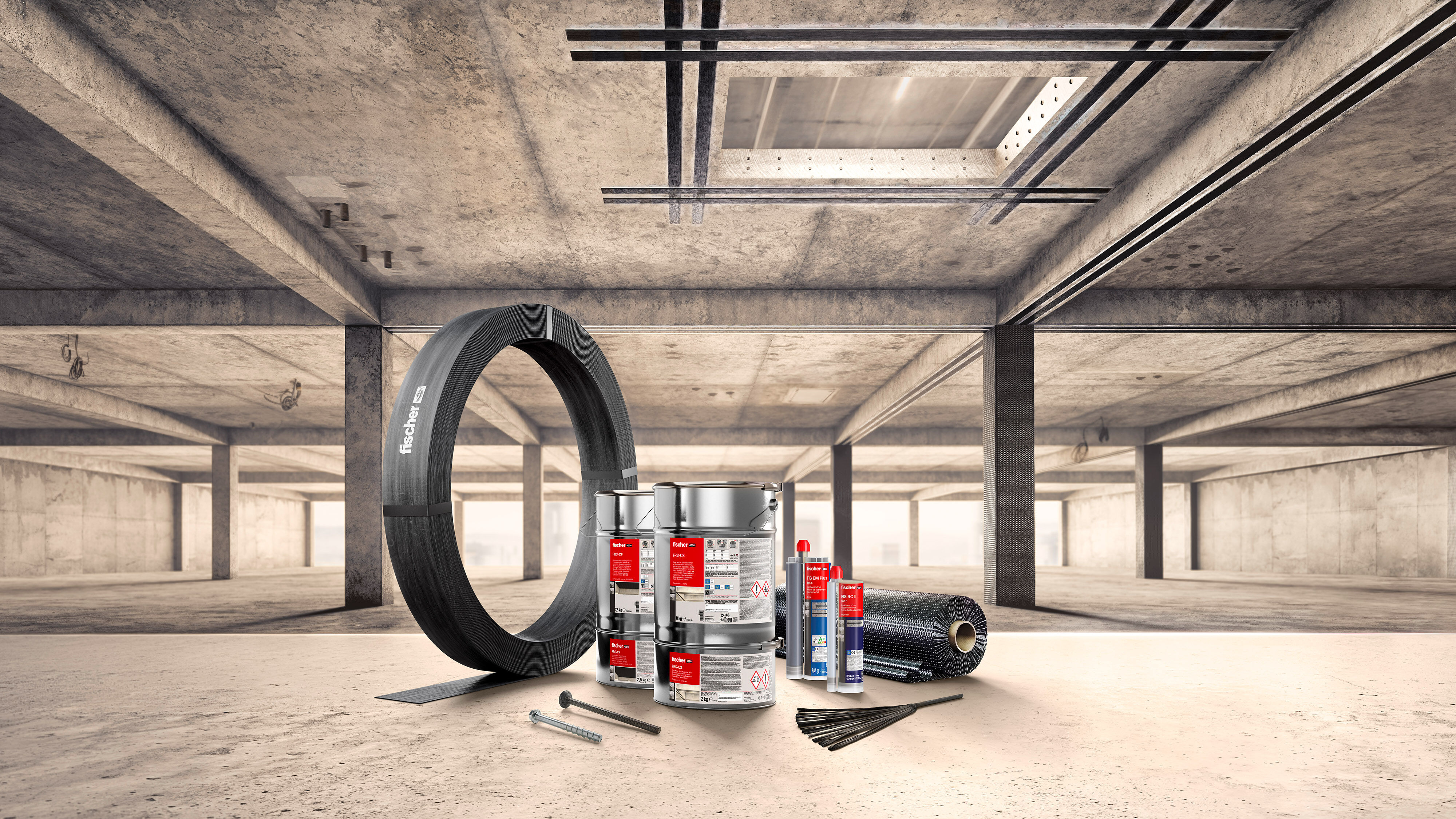
With rising sustainability requirements, scarce resources an ageing building stock, construction on existing structures is moving into focus. To upgrade buildings and infrastructure safely and cost-effectively, fischer offers a coordinated portfolio: from innovative Carbon Fibre Reinforced Polymers (CFRP) and Carbon Fibre Fabrics (CF), through established methods such as concrete overlays and post-installed rebar connections, to bridge cap anchoring.
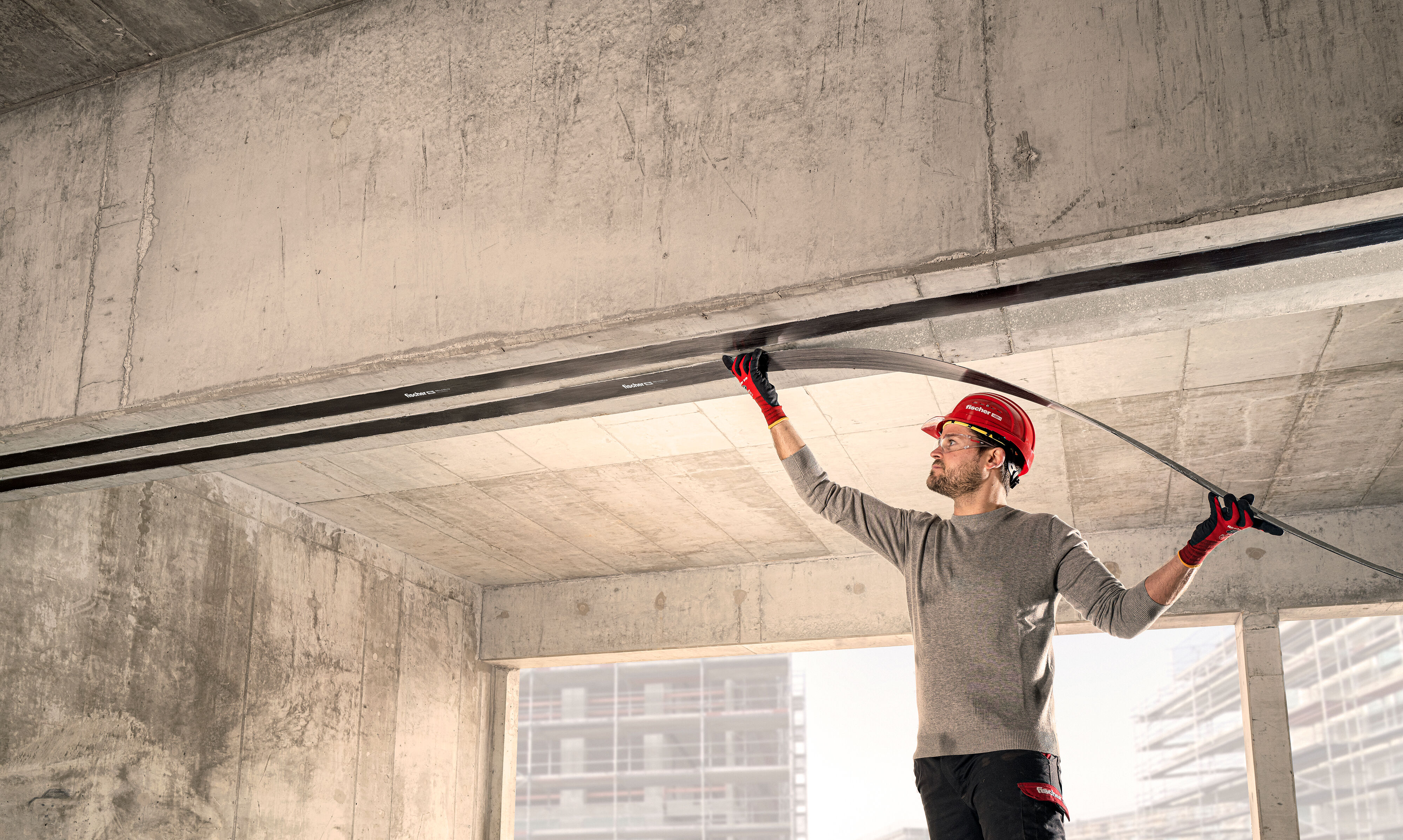
A key challenge in upgrading existing structures is to increase the structural load-bearing capacity without significantly increasing the dead load of the structure or making extensive interventions in the existing structure. fischer CFRP laminates and CF Fabrics enable high-performance strengthening with bonded reinforcement that adds little weight and only minimal thickness.
With a tensile strength of more than 3,000 N/mm², a modulus of elasticity of 170 kN/mm² and a density of only around 1.6 g/cm³, the FRS-L-S and FRS-L-S NSM CFRP laminates offer outstanding efficiency: Relative to their dead weight, their specific stiffness is nearly four times higher and their specific tensile strength is more than 20 times higher than that of conventional B500 reinforcing steel. They are also fully corrosion-resistant. The CFRP laminates can be bonded into grooves made in the concrete surface (as the near surface mounted reinforcement: FRS-L-S NSM) or bonded onto the surface of structural members (as the externally bonded laminates FRS-L-S and FRS-L-H).
Unidirectional fischer CF Fabrics (FRS-W U300/U600) adapt flexibly even to complex geometries such as round columns or profiled beams.
Comprehensive national and international approvals and technical assessments (ETA-24/0281, ICC ESR-4774, Chinese GB code, Italian CVT No. 184) confirm the performance of both systems. The associated adhesives and mortars meet the requirements of EN 1504 and the specifications of the DIBt (German Institute for Building Technology). The FRS-L-S and FRS-L-H externally bonded CFRP laminates also hold the German general construction technique permit (aBG) Z-36.1-91.
Cementitious Concrete Repair
Ten coordinated fischer products cover the full range of cementitious concrete repair tasks, from reprofiling and filling spalls and defects to restoring the concrete cover on chloride-contaminated or carbonated concrete. The range includes corrosion protection for exposed reinforcing steel, bonding agents for a reliable bond to existing concrete, repair mortars for structural (R3/R4) and non-structural (R1/R2) repairs, and fine mortars for a durable, visually clean surface finish. The portfolio also includes a high-flow grout for anchoring in accordance with EN 1504-6 and rapid-setting mortars for time-critical jobsites.
Durable, structurally effective and reliable concrete repair depends on precise compatibility with the substrate and matching material parameters. The systems offer matched compressive strength, flexural tensile strength and modulus of elasticity, as well as matched setting time and permeability. They also resist aggressive substances, freeze-thaw cycles and sulphates. In addition, solutions with drinking water approvals and declarations of conformity in accordance with ZTV-ING (German Additional Technical Terms of Contract and Guidelines for Civil Engineering Structures) are available. All Declarations of Performance (DoPs) are based on the relevant parts of the European standard series EN 1504.
Reinforcement, concrete overlay and bridge caps
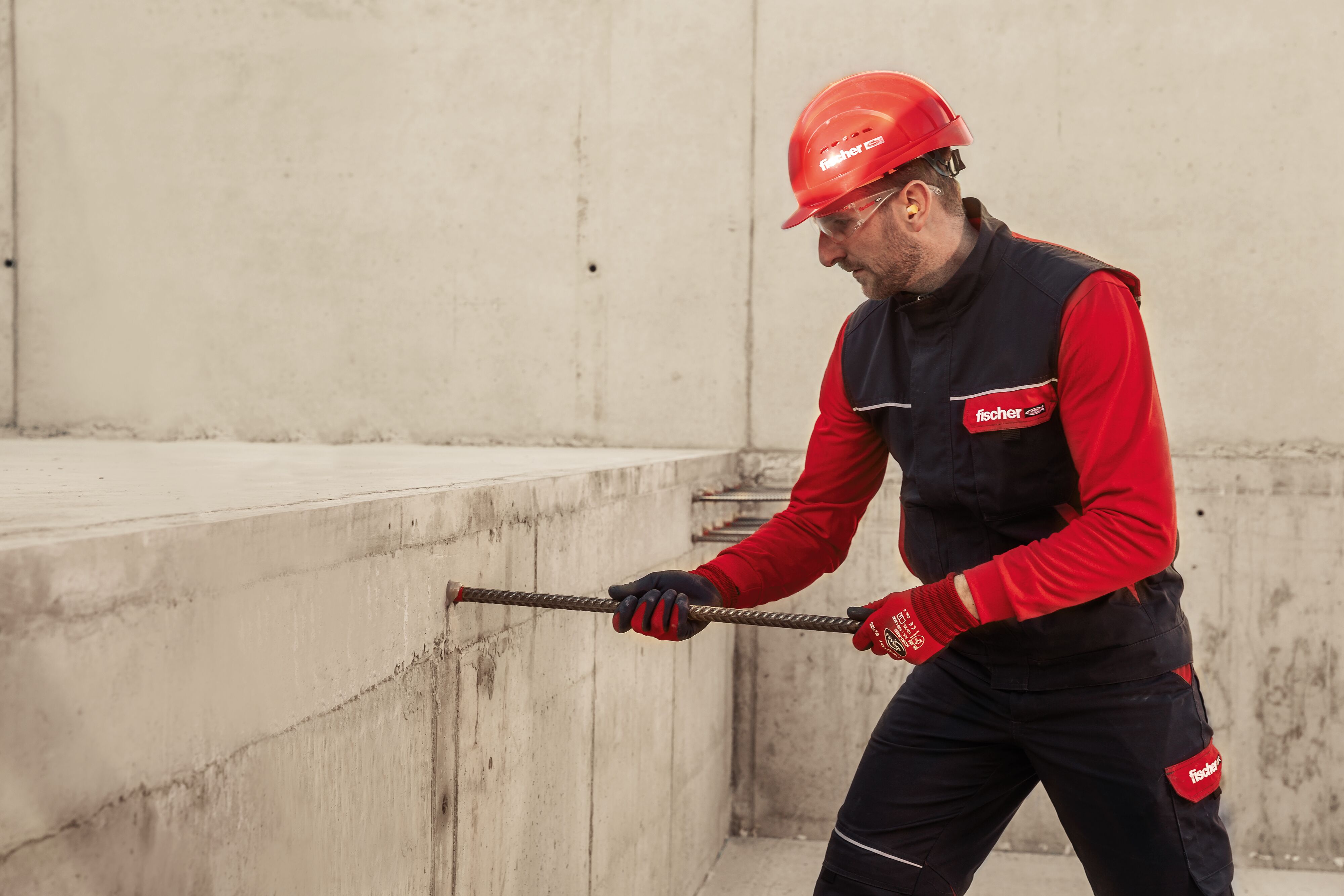
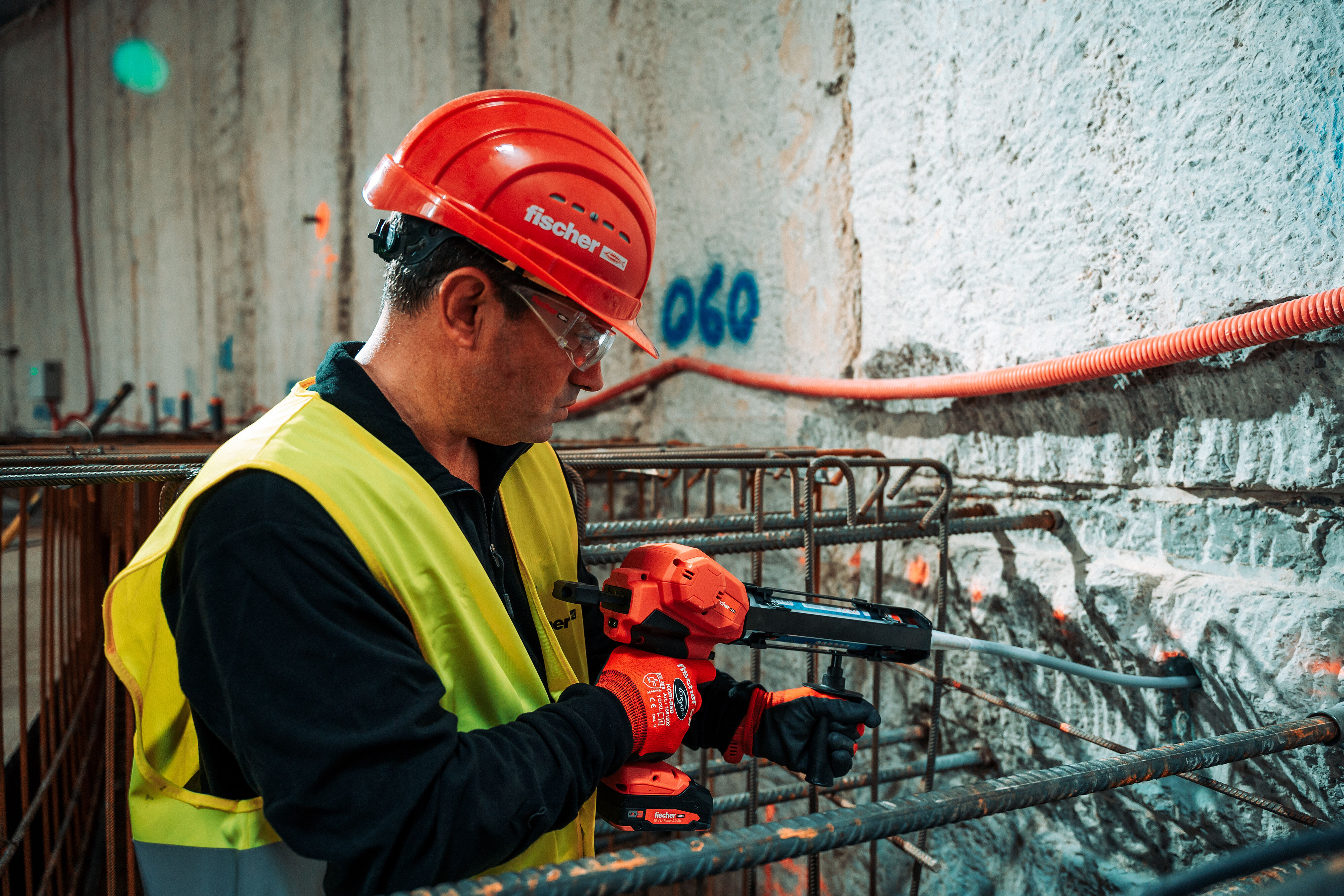
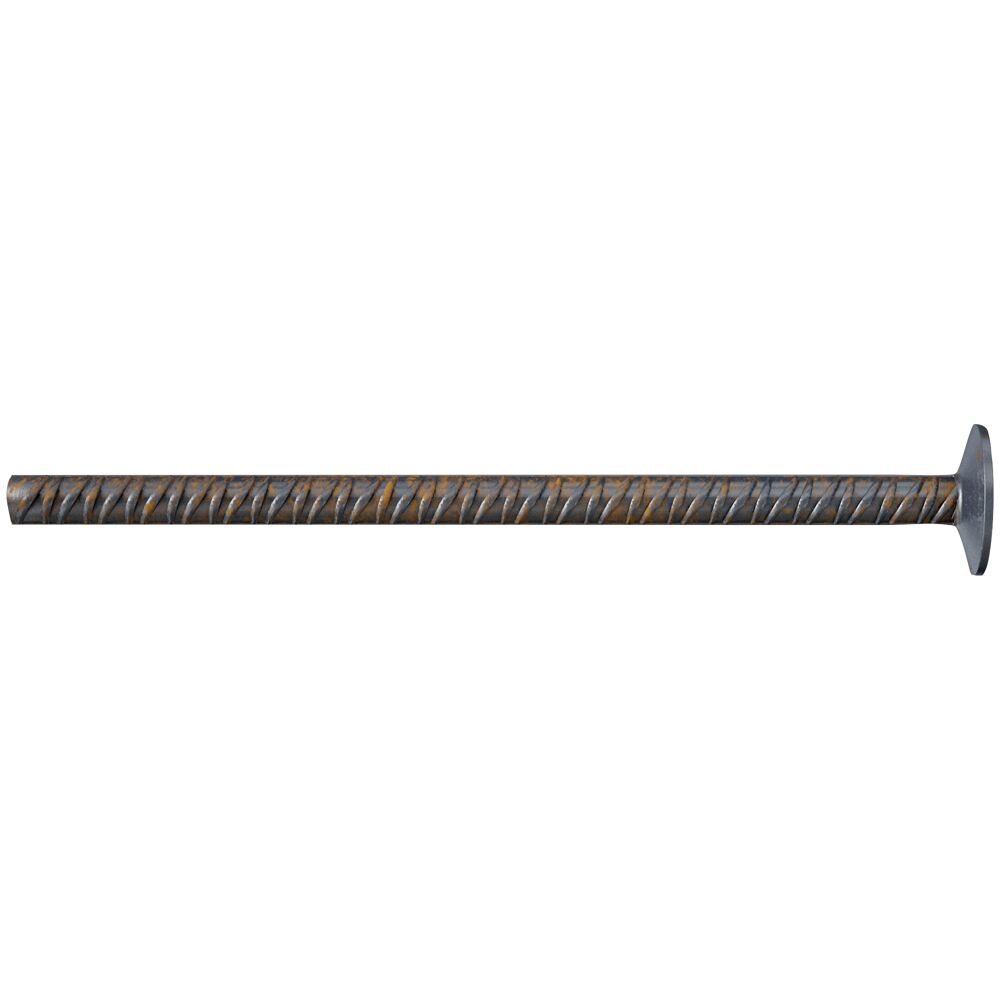
For new connections, cross-sectional extensions and component extensions, fischer offers approved injection systems for post-installed rebar connections (also in combination with the FRA rebar anchor).
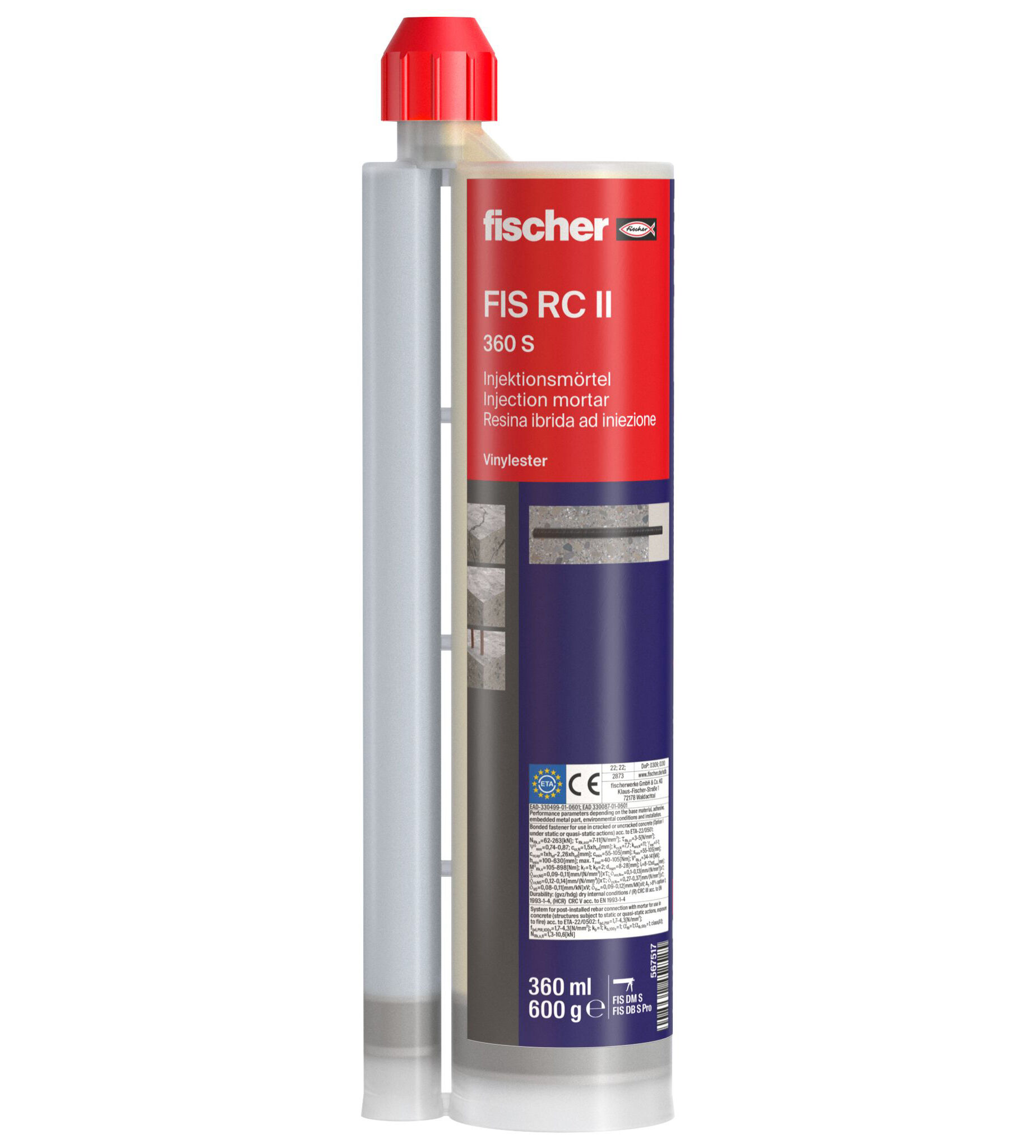
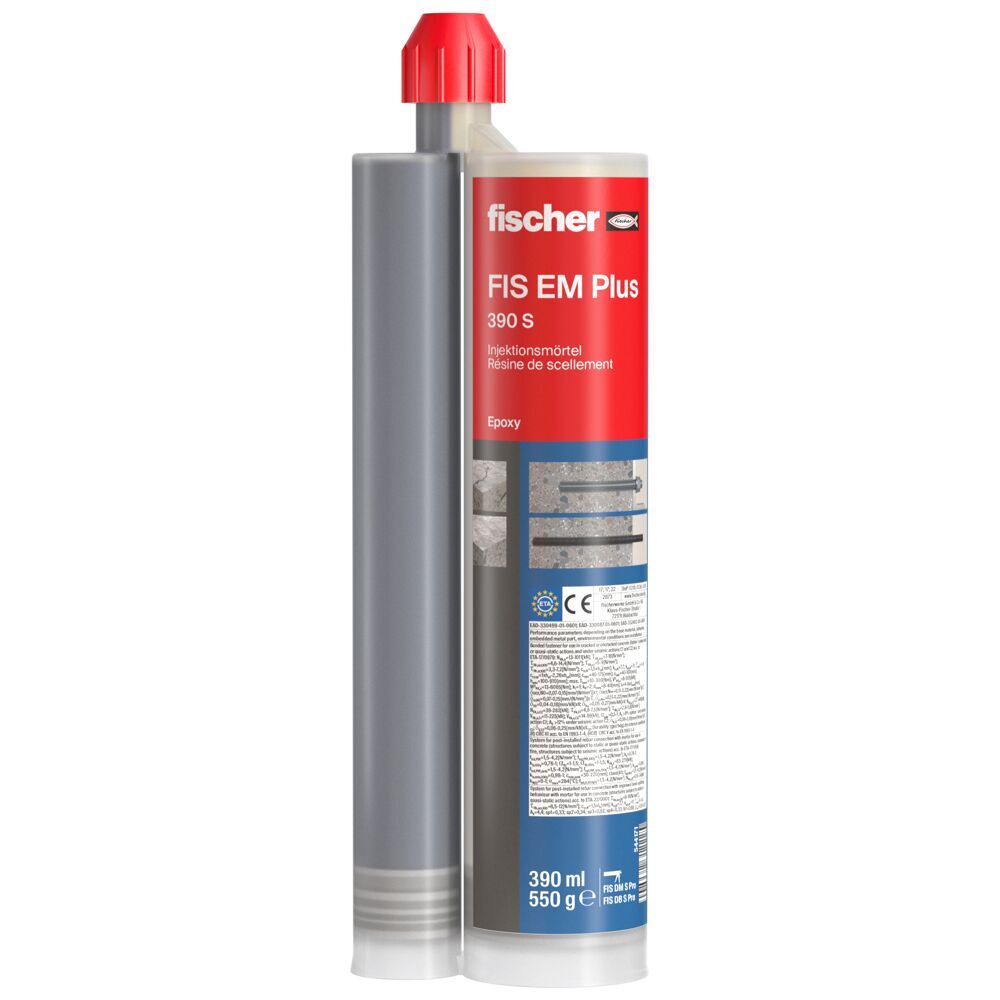
The vinyl ester hybrid mortar RebarConnect FIS RC II (Ø 8–40 mm, up to 2 m anchorage depth) offers a 100-year service life (ETA), fire resistance up to R 120, an installation temperature range from -10°C to +40°C and eliminates the need for subsequent drill hole cleaning when using hollow drill bits with vacuum extraction. The epoxy resin mortar FIS EM Plus (Ø 8–40 mm, up to 2 m anchorage depth) is also suitable for the permanent transfer of heavy loads into concrete, with a service life of 120 years (ETA) and R 120 (ETA), as well as R 240 according to the CSTB report from France (Centre Scientifique et Technique du Bâtiment). Application is possible down to -5°C. No additional surface roughening is required in diamond-drilled holes in concrete. The versatile, styrene-free vinyl ester hybrid mortar FIS V Plus is also suitable for reinforcement connections with diameters of Ø 8–28 mm.
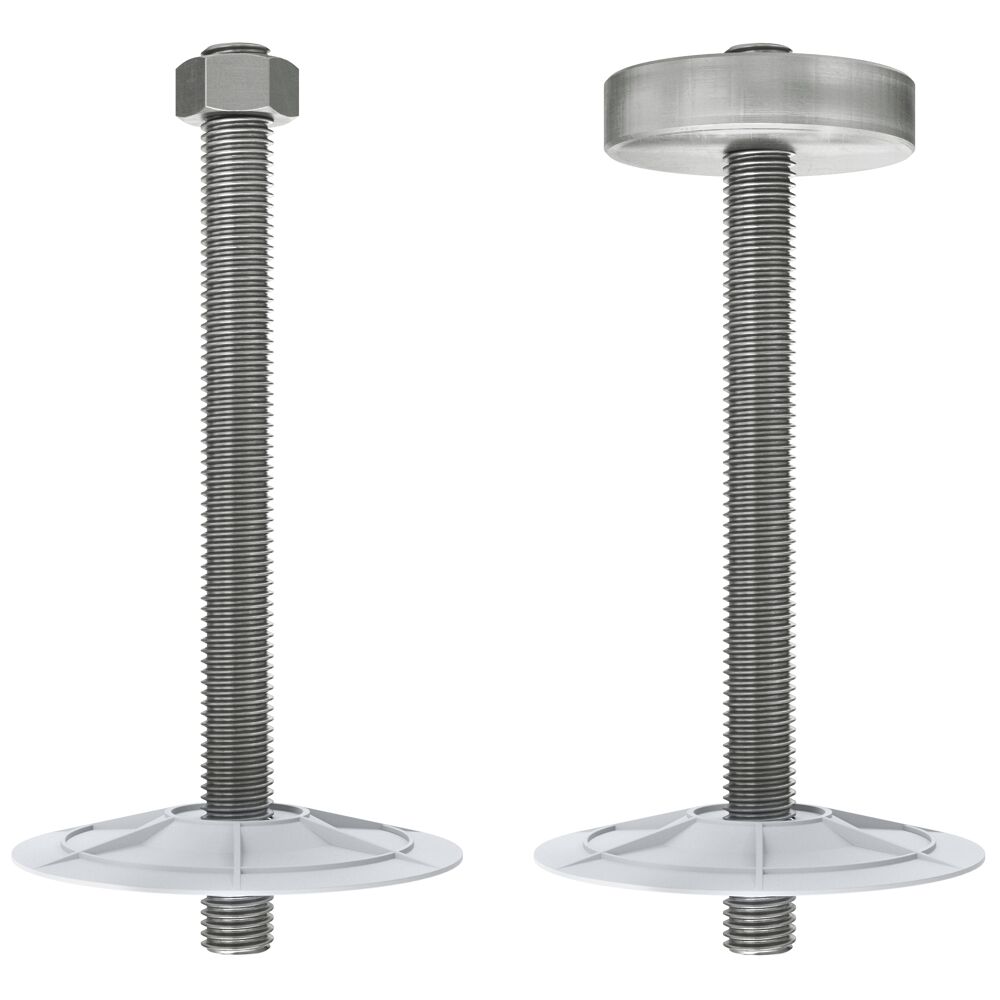
To increase flexural and shear capacity through concrete overlays, the FCC concrete-to-concrete shear connector joins old and new concrete with full technical approval (can be combined with FIS EM Plus, FIS RC II, FIS V Plus or FIS SB). The UltraCut FBS II concrete screw, with ETA approval, is available as a purely mechanical, time-saving alternative shear connector; variable anchorage depths allow for precise adaptation to structural loads.
In bridge construction, the reliable anchoring of edge beams and bridge caps is a recurring key task. With the FCC-B bridge cap anchor (M16–M24), fischer offers a complete solution with a German general construction technique permit (aBG) which, in combination with the FIS EM Plus or FIS SB injection mortars, guarantees permanent load transfer.
With this comprehensive portfolio, fischer is the integrated solution partner for designers, structural engineers and contractors when it comes to the sustainable preservation of structures and infrastructure.
An exclusive glimpse behind the scenes at fischer:
Spotlights - fischer group of companies