- About fischer
- group of companies
- Sustainability
- Newsroom
- Spotlights
- Career
- Home
- Spotlights
- fisco: Accessible and safe progress

Solutions for barrier-free mobility
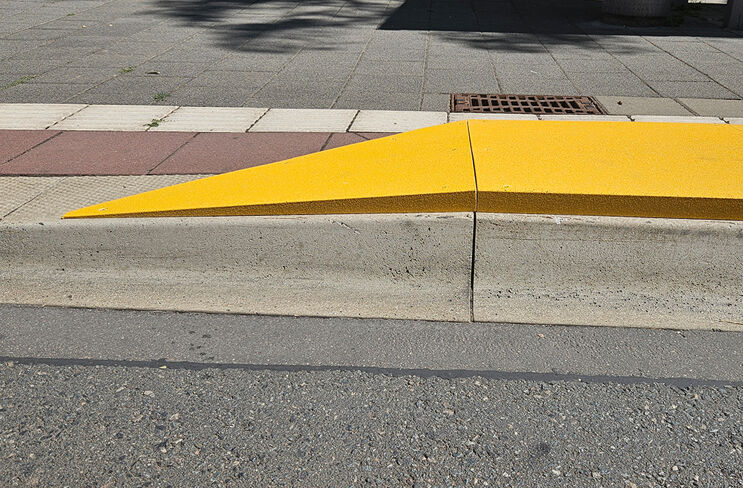
Accessibility in public transport (ÖPNV) affects many people: wheelchair users as well as seniors with walking aids, parents with strollers, travelers with suitcases, or passengers with temporary mobility impairments. Important for accessible public transport are suitable transitions between the stop and the vehicle. Modular ramp systems from fisco bridge height differences and gaps between the train or bus platform and the vehicle. This facilitates safe and independent boarding and alighting from buses as well as U-Bahn, S-Bahn, and trams.
The modular systems can be adapted to different structural conditions, project requirements, and user needs. The glass fiber reinforced plastic (GFK) used combines low weight with high load capacity and durability. The ramp systems can be efficiently installed and flexibly integrated into various infrastructure projects. They also meet the requirements of building material class Bfl-s1 according to DIN EN 13501-1. This means they are flame-retardant with low smoke development.
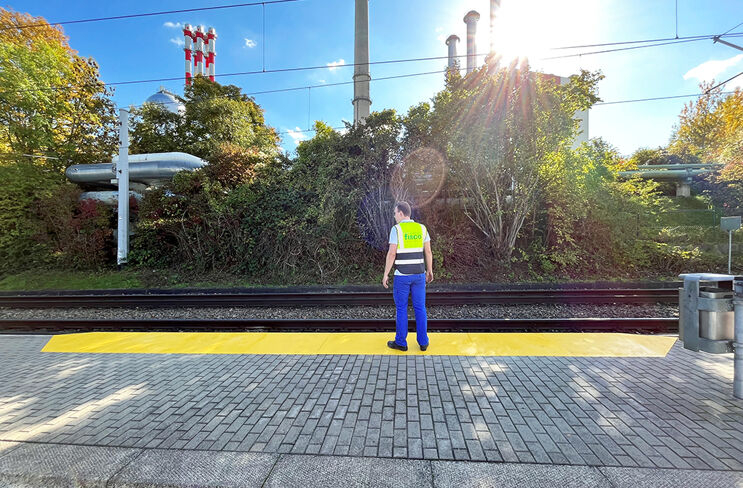
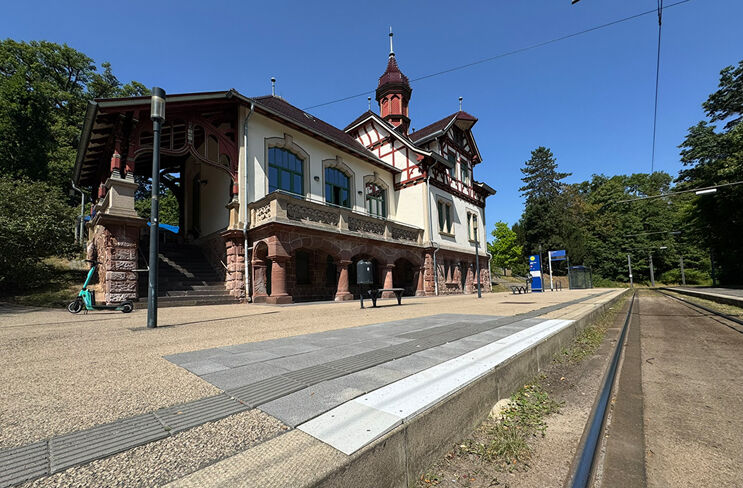
Practical examples show how existing facilities can be specifically further developed: In Kassel, 80 curb height increases were implemented, in Darmstadt 63 fisco ramp systems were installed at tram stops, and for the Jena tram, 67 platform height increases were realized.
The projects demonstrate: Targeted modernization of existing stops can also help improve access to buses and trains and adapt existing transport infrastructure to the requirements of contemporary mobility.
For municipalities and responsible authorities, the further development of existing infrastructure opens up scope for action. Curb height increases, ramp systems, and platform height increases can be used just as well as solutions for new construction projects. In this way, accessibility can be gradually integrated into the existing infrastructure.
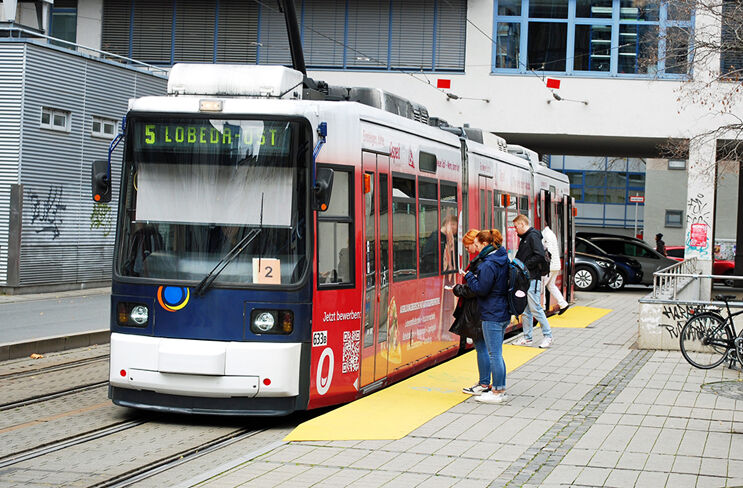
Customer feedback highlights the advantages of the fisco solution: “Since 2022/23, we have had individual GFK ramps in our network in a long-term test, including those from fisco,” says Dr.-Ing. Toni Hallas, project manager in the tram network department at HEAG mobilo GmbH (municipal transport company of the science city of Darmstadt and the district of Darmstadt-Dieburg). “A broad survey among the target group of mobility-impaired persons showed that the ramps were almost consistently rated as ‘good’ or ‘very good’ in terms of comfort, sense of security, and visibility. They have also proven to be very robust and low-maintenance. This convinced us to now install the ramps at all stops where there is sufficient space on the platform.”
fi:resist for demanding infrastructure
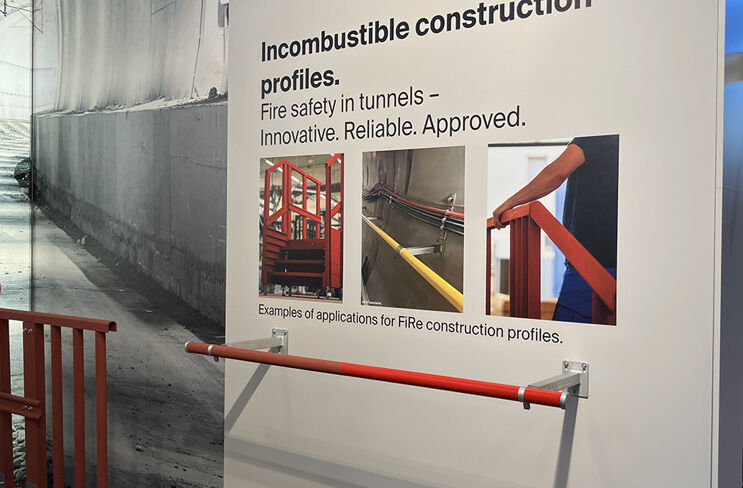
Where mechanical durability and especially fire protection play a central role, the FiRe construction profiles from fi:resist are used. The fully inorganic glass fiber composite material is produced using the pultrusion process and is classified as building material class A1 according to DIN EN 13501-1. This makes fi:resist a non-combustible material particularly suitable for applications with high fire protection requirements – for example in tunnel construction and railway infrastructure. In addition, the material offers further properties for demanding applications: fi:resist is lightweight, mechanically highly durable, and corrosion-resistant. The material is also electrically non-conductive, radio signal permeable, and has low thermal conductivity.
Since March 2025, fi:resist has been approved by the Federal Railway Authority (EBA). Additionally, since September 2026, the approval Z-10.9-963 from the German Institute for Construction Technology (DIBt) has been granted. This is an important prerequisite for use in the German market and strengthens international competitiveness.
From idea to implementation
fisco supports infrastructure projects along the entire value chain – from the development and manufacturing of fiber composite solutions to on-site implementation. As part of the fischer Group, extensive expertise in fastening technology is also available.