
- About fischer
- group of companies
- Sustainability
- Newsroom
- Spotlights
- Career

- Home
- Spotlights
- World record in Karlsruhe

When hundreds of children watch a small rolling ball with excitement, when gears click, motors hum, and suddenly loud cheers fill the hall, then something special has happened again in Karlsruhe.
For the eleventh time in a row, students set a world record at the Karlsruhe fischertechnik Day. Together, 130 elementary school children built a ball transfer machine with an impressive length of 102.68 meters — once again proving how much creativity, team spirit, and technical understanding young minds possess.
But behind this world record lies much more than just an extraordinary construction. It symbolically represents what fischertechnik has stood for decades: making technology tangible.
Many still know fischertechnik from their own childhood. Small building blocks, gears, motors, and constructions that often meant hours of tinkering. But this is exactly where the system’s special strength lies.
fischertechnik creates something that is often missing in traditional lessons: technology is not just explained — it is experienced.

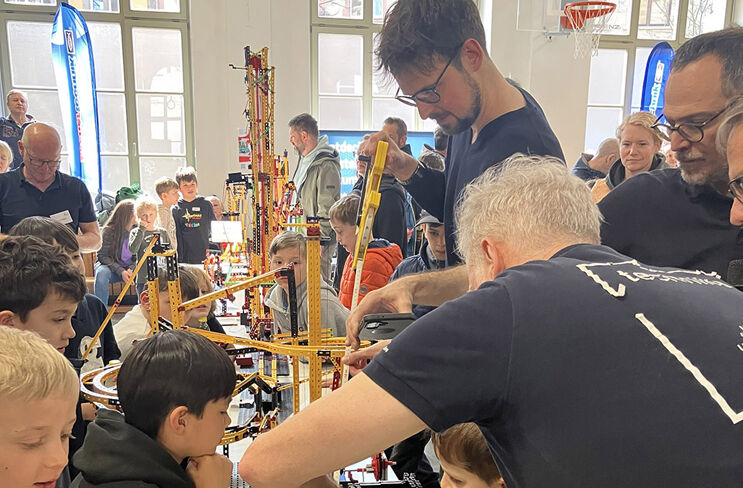
The Karlsruhe world record impressively demonstrates how much more is behind such projects.
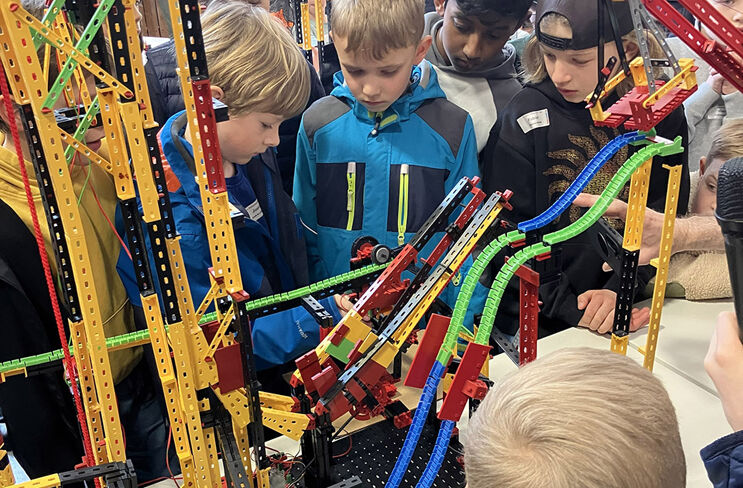
For weeks, the children worked on their individual modules in their technology clubs. They planned sequences, tested constructions, and repeatedly had to find creative solutions when something didn’t work. Only on the big event day were all elements connected into one huge machine.
And that is exactly what makes it so appealing: Every single child contributes an important part to the big picture.
The ball can only travel the entire distance if all modules function and work together perfectly. In the process, the children learn skills that go far beyond technology.
Above all, they learn that mistakes do not mean failure. When a mechanism stops or a ball gets stuck, they do not give up — instead, they continue to tinker together.
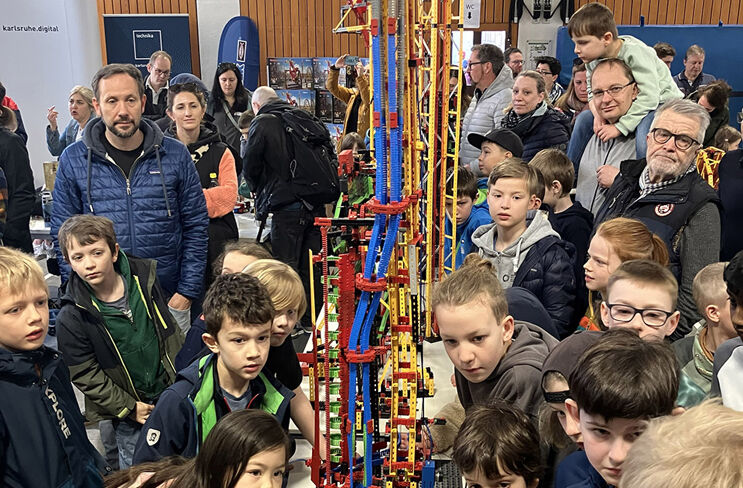
The 102.68-meter-long ball transfer machine from Karlsruhe is undoubtedly impressive. But the real success cannot be measured in meters.
The true world record lies in the shining eyes of the children, in the pride after a successful construction, and in the enthusiasm with which they tinker, build, and experiment.
Because this is exactly where the future of technology begins: Not in large laboratories or corporations, but often at a table full of small building blocks — and with children discovering that they can shape the world themselves.
Further information about fischertechnik can be found here: www.fischertechnik.de/en