- About fischer
- group of companies
- Sustainability
- Newsroom
- Spotlights
- Career

- Home
- Spotlights
- Home gym without crash: How to safely hang punching bags & pull-up bars

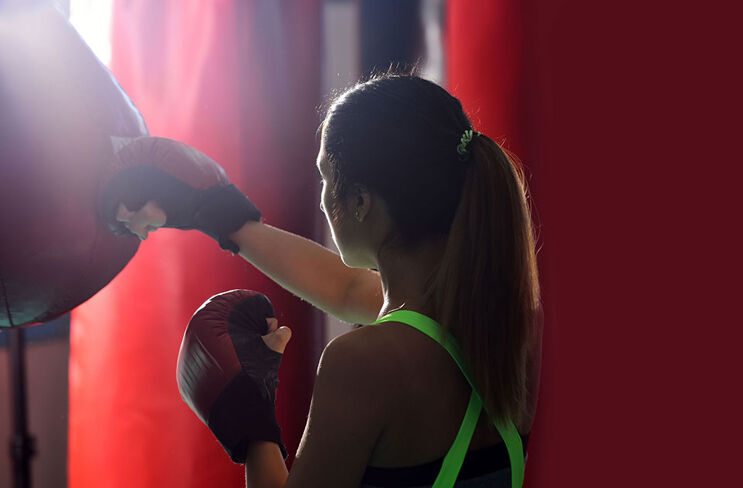
Punching bag, pull-up bar, sling trainer – the home gym is increasingly moving into basements, garages, or even the living room. Space-saving, always ready to use, and just a step away from the sofa. But before you start boxing or do your first pull-up, a crucial question arises: Will it actually hold? Because when mounting fitness equipment on walls or ceilings, more than just motivation comes into play – forces are at work here that pack a punch.
Punching bag and pull-up bar are ready, the home gym is finally to become a reality. But in walls and ceilings, a risk can lurk that many forget: incorrect fastenings.
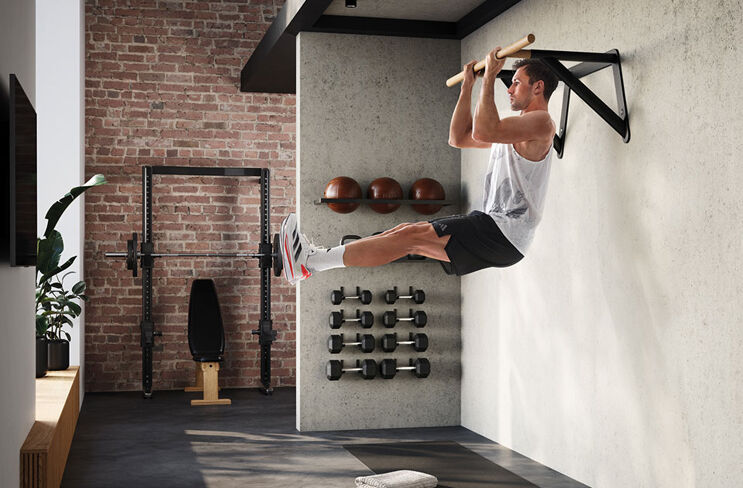

When the devices are secured so safely, I have a very good feeling and can fully concentrate on my training
What holds – and what doesn’t? Whether a fastening is secure depends on the interaction of the building material, anchor, screw, and load. Anyone installing heavy or movable sports equipment needs to know what the wall is made of – and whether it can handle the training plan.
Particularly critical are drywall or suspended ceilings. They are designed for lamps, pictures, and other lighter objects, not for swinging punching bags or pull-up sets. For a safe home gym, the rule is: the substrate must be solid enough – and the fastening system must be matched accordingly.
A classic standard plastic anchor can quickly reach its limits with heavy, movable loads. For high loads and dynamic stress, profile solutions are therefore required.
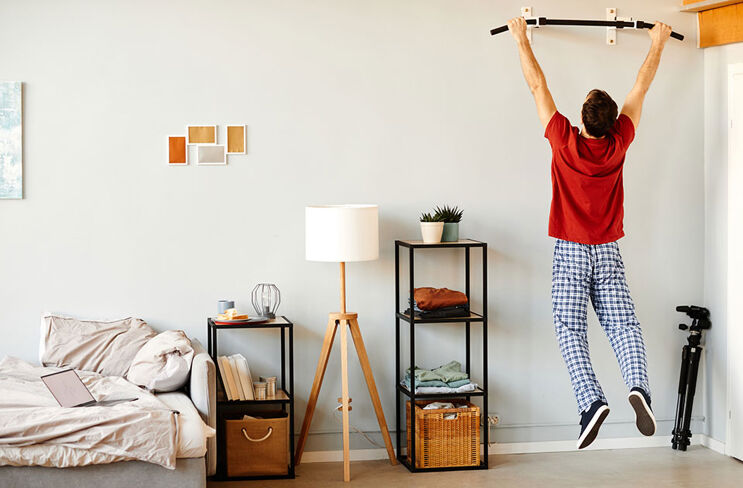
Not only the "what," but also the "where" determines safety. A punching bag needs sufficient distance from walls and furniture. Stable mounts with long arms or foldable joints ensure freedom of movement. Pull-up bars must be firmly and precisely mounted horizontally. Spacer consoles compensate for unevenness, and a spirit level prevents tilting. Because if mounted crookedly, you quickly train one arm or shoulder unevenly.
Important for both devices: The further the punching bag or pull-up bar is from the wall, the more important a generous mounting plate becomes to safely transfer the forces into the fastening base.
Dumbbells, punching bag, or pull-up bar: Those who train at home integrate fitness more easily into everyday life and save costs in the long run. A home gym stands and falls with the right mounting. Those who plan carefully here and rely on suitable systems train safely, effectively, and sustainably. Because fitness equipment should challenge muscles. Not the wall.